Mob: 07377594191
Tel: 01773 765858


DIAMOND INFORMATION
Learn More About The History of Diamonds and the Different Uses


What Is Diamond
Diamond is a solid form of the element carbon with its atoms arranged in a crystal structure called diamond cubic. Diamond has the highest hardness and thermal conductivity of any natural material, properties that are utilized in major industrial applications such as cutting and polishing tools.
How Old are Diamonds
Most natural diamonds have ages between 1 billion and 3.5 billion years. Most were formed at depths between 150 and 250 kilometres (93 and 155 mi) in the Earth's mantle, although a few have come from as deep as 800 kilometres (500 mi). Under high pressure and temperature, carbon-containing fluids dissolved various minerals and replaced them with diamonds. Much more recently (tens to hundreds of million years ago), they were carried to the surface in volcanic eruptions and deposited in igneous rocks known as kimberlites and lamproites.


DIAMOND USE'S
Diamonds have been adapted for many uses because of the material's exceptional physical characteristics. Of all known substances, it is the hardest and least compressible. It has the highest thermal conductivity and the highest sound velocity. It has low adhesion and friction, and its coefficient of thermal expansion is extremely low. Its optical transparency extends from the far infrared to the deep ultraviolet and it has high optical dispersion. It also has high electrical resistance. It is chemically inert, not reacting with most corrosive substances, and has excellent biological compatibility.
diamond Hardess
The hardness of diamond contributes to its suitability as a gemstone. Because it can only be scratched by other diamonds, it maintains its polish extremely well. Unlike many other gems, it is well-suited to daily wear because of its resistance to scratching perhaps contributing to its popularity as the preferred gem in engagement or wedding rings, which are often worn every day.

diamonds rareity
Diamonds are extremely rare, with concentrations of at most parts per billion in source rock. Before the 20th century, most diamonds were found in alluvial deposits. Loose diamonds are also found along existing and ancient shorelines.ell your visitors a bit about your services.


The dispersion of white light into spectral colors is the primary gemological characteristic of gem diamonds. In the 20th century, experts in gemology developed methods of grading diamonds and other gemstones based on the characteristics most important to their value as a gem. Four characteristics, known informally as the four Cs, are now commonly used as the basic descriptors of diamonds: these are its mass in carats (a carat being equal to 0.2 grams), cut (quality of the cut is graded according to proportions, symmetry and polish), color (how close to white or colorless; for fancy diamonds how intense is its hue), and clarity (how free is it from inclusions). A large, flawless diamond is known as a paragon.
diamond cutting
In 2003 92% of the world's diamonds were cut and polished in Surat, India. Other important centers of diamond cutting and trading are the Antwerp diamond district in Belgium, where the International Gemological Institute is based, London, the Diamond District in New York City, the Diamond Exchange District in Tel Aviv, and Amsterdam.


diamond
4c's
Diamonds are a timeless expression of love, commitment and elegance. But, for shoppers who aren’t experts in the “4 Cs” of cut, clarity, carat weight and color, it can be daunting trying to find the perfect stone. And, when buying a diamond from a local jewellery store, customers are often subjected to pushy sales tactics rushing them to buy something on the spot, at Lawrencetown you are encouraged to visit other jewellery stores and compare the quality and price of high street jeweller's compared to buying direct from Lawrencetown, we are never pushy and we source our stones direct, cutting out the middleman.
pick your own diamond
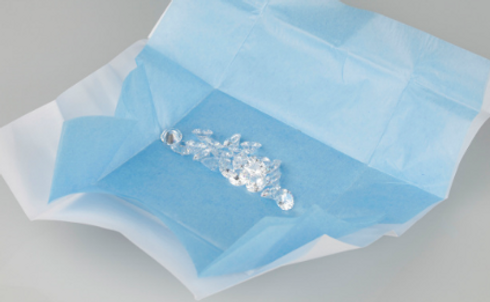
Exotic and colorful, a Diamond from Lawrencetown Gemstone Collection will amaze you. Diamonds make for majestic gemstone jewellery. you choose your own Diamond and our goldsmiths will make you a bespoke ring, pendant or earrings for a special occasion.
BESPOKE
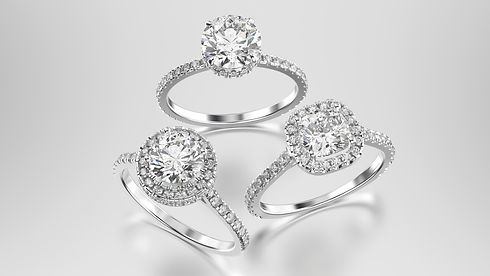
A Diamond from Lawrencetown's Gemstone Collection will amaze you. Diamonds make for majestic gemstone jewellery. you choose your own gemstone and our goldsmiths will make you a bespoke ring, pendant or earrings for a special occasion.

create your own diamond ring
Select from the largest online diamond offering in the world with over 3.5 million diamonds to choose from in every size and quality, Click on the link below and choose your setting and the diamond to craft your perfect diamond ring.